



Blog
How To Store Beeswax Tealights To Extend Shelf Life

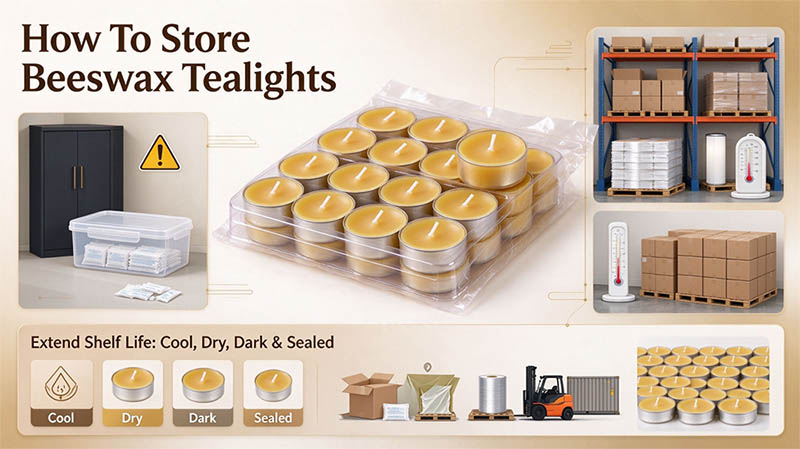
Pure beeswax tealights are beloved for their clean burn, subtle honey aroma and natural warm glow. While beeswax is more stable than soy or paraffin wax, it still reacts strongly to heat swings, UV light and high humidity. Poor storage causes softening, deformed cups, wick dampness, discoloration, scent fade and uneven burning.
This guide covers three critical groups: home consumers, candle manufacturers preparing outbound shipments, and wholesale purchasers / distributors storing bulk inventory. Follow these rules to lock in quality and maximize shelf life.
Understanding Beeswax Basics Before Storage
Pure beeswax melts at roughly 62–64°C (144–147°F). Even well below melting point, sustained temperatures above 28°C (82°F) will gradually soften the wax, bend aluminum cups and make tealights stick together.
High relative humidity over 60% RH can make cotton wicks absorb moisture, leading to hard lighting, sputtering and short burn time. UV rays from sunlight fade the natural golden beeswax tone and break down natural fragrance compounds.
When kept properly sealed, cool, dark and dry, unopened beeswax tealights can maintain premium quality for 2–3 years.
Part 1: Storage Tips For Home Users
For small packs of beeswax tealights bought for home decor, spa nights and daily use, the goal is simple: avoid heat, moisture and light.
- Choose the right storage spot
Pick a dark, cool indoor cabinet, pantry drawer or closet. Ideal range: 15–24°C (59–75°F), RH below 60%. Keep far from sunny windows, radiators, kitchen stoves, ovens, bathroom showers and hot attic spaces. Never leave tealights inside a parked car in warm weather. - Keep original packaging or seal tightly
Leave tealights in their factory clamshell, cardboard tray or sealed polybag. If you open a bulk pack, transfer unused tealights into an airtight container or resealable zip bag. Add 1–2 silica gel packets to absorb ambient moisture, especially in damp climates.
Separate scented beeswax tealights from other strong-smelling items to stop scent cross-contamination. - Do not stack heavy objects on top
Beeswax softens under pressure. Heavy books or containers stacked directly on tealight trays will crush aluminum cups and distort wax. Store them flat and single-layered where possible.
Common mistakes to avoid
- ❌ Do NOT refrigerate or freeze beeswax tealights. Rapid temperature change causes condensation on wax and wick; cold wax also becomes brittle and prone to cracking when warmed back up.
- ❌ Do NOT store loose tealights open on shelves exposed to dust and steam.
- ❌ Do NOT leave leftover tealights beside candles, heaters or outdoor patio areas overnight.
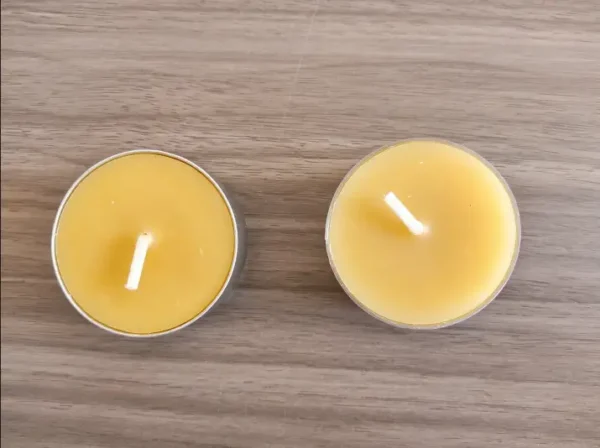
A harmless white powdery bloom sometimes appears on beeswax surface after long storage. This is natural beeswax bloom, not spoilage; gently wipe with soft cloth before lighting.
Part 2: Factory Shipping Guidelines — Prevent Softening & Water Intrusion During Transit
For candle makers and factories, the highest risk happens during long-distance transport, especially summer road delivery and ocean container shipping. Closed shipping containers can easily hit 45°C+ and high condensation.
Packaging standard before shipment
- Inner unit protection
Each tray of beeswax tealights stays in sealed PE shrink wrap or moisture barrier film. For humid / tropical export orders, line each carton with a waterproof PE liner bag, add enough food-grade silica gel desiccants calculated by carton volume to control RH inside box.
Use rigid corrugated cartons; avoid thin soft boxes that bend under stacking weight.

- Pallet loading & reinforcement
Use heat-stretch wrap to fully wrap the whole pallet, covering top and sides to block rain, spray and dew during loading and transit. Add corner protectors to prevent carton crushing.
Do not over-stack pallets. The weight of upper cartons squeezes tealight cups and deforms softened wax. - Logistics selection and seasonal controls
– Hot season (summer): Prioritize night transport, insulated trucks or temperature-controlled logistics for long hauls. Avoid putting beeswax tealight cargo on the top deck of containers, where solar radiation creates extreme heat.
– Ocean shipment: Mark cartons with “Keep Cool, Keep Dry, Fragile, Do Not Stack Heavy Loads”. Request stowage away from engine room and container doors, where condensation is worst.
– Label clearly: No direct sun, no rain, avoid heat sources, handle gently. - QC check before packing
Reject any tealights already slightly soft. Do not package warm candles straight from production; fully cool to ambient stable temperature before sealing boxes, otherwise trapped heat and moisture will cause sweating inside packaging.
Part 3: Bulk Storage Rules For Wholesale Buyers, Importers & Distributors
If you are a retailer, reseller or importer holding large stock of beeswax tealights, warehouse environment management determines your whole batch quality.
- Warehouse environment specification
✅ Temperature target: Stable 18–24°C, maximum sustained temperature should not exceed 28°C.
✅ Humidity: Maintain RH 40–58%. Install hygrometers and dehumidifiers for coastal, rainy-region warehouses.
✅ Lighting: No natural sunlight inside storage zone. Use low-heat LED warehouse lighting.
✅ Ventilation: Gentle continuous ventilation, avoid direct cold or hot wind blowing on stock. - Pallet stacking & zoning rules
– Keep all pallets raised on plastic pallets, never place cartons directly on concrete floor or against walls. Floor moisture and wall condensation soak boxes and wicks. Leave 10–15cm gap between pallet stack and walls.
– Stack height limit: generally under 2 meters. Place heavier cargo on separate racks, never on top of candle pallets.
– Zone separation: Separate beeswax tealights from strong odor goods (soap, chemicals, spices) and heat-generating equipment. Separate different fragrance SKUs to prevent scent mixing. - Stock rotation & regular inspection
Follow FIFO (first in, first out). Record inbound date on each pallet label.
Weekly spot checks:
• Check carton for damp marks, water stains, bulging or soft boxes
• Randomly open one carton per pallet to check wax softness, wick dryness and bloom status
• Replace desiccant packets periodically for long-term stock (>6 months) - Emergency handling
If a batch arrives slightly softened: move immediately to a stable cool warehouse, lay pallets loosely without extra weight, let wax slowly re-harden naturally. Do NOT put them into AC blast cooling, which causes condensation.
If moisture has seeped into cartons: isolate this stock immediately, air-dry gently in low-humidity room, test wick ignition before resale.
Frequently Asked Questions
- Q: Can beeswax tealights go bad?
A: Pure beeswax does not turn rancid. The main degradation issues are soft deformation, damp wicks, color fading and scent loss, not rot. Proper storage lets them stay usable for years. - Q: Is beeswax tealight safe in shipping container?
A: Yes, only if you add moisture barrier packaging, desiccants and avoid the hottest container positions. Pure beeswax has higher melting point than soy wax, but prolonged high heat will still cause deformation. - Q: What is the white dusty layer on beeswax tealight?
A: Natural bloom. It is a harmless property of pure beeswax, not mold or damage. It will not affect burning performance.
Final Takeaway
Home users focus on cool, dark, dry sealed storage. Factories must solve transit heat and water ingress with moisture barriers, desiccants and proper pallet wrapping. Wholesale buyers rely on stable climate-controlled warehouse, off-floor stacking and regular humidity monitoring.
When you control heat, humidity and light, your beeswax tealights retain their natural golden look, honey scent and clean, steady burn for the full shelf life.


