



Blog
How Our Candles Travel to Europe: Pallets, Boxes, and the 30-Day Sea Route

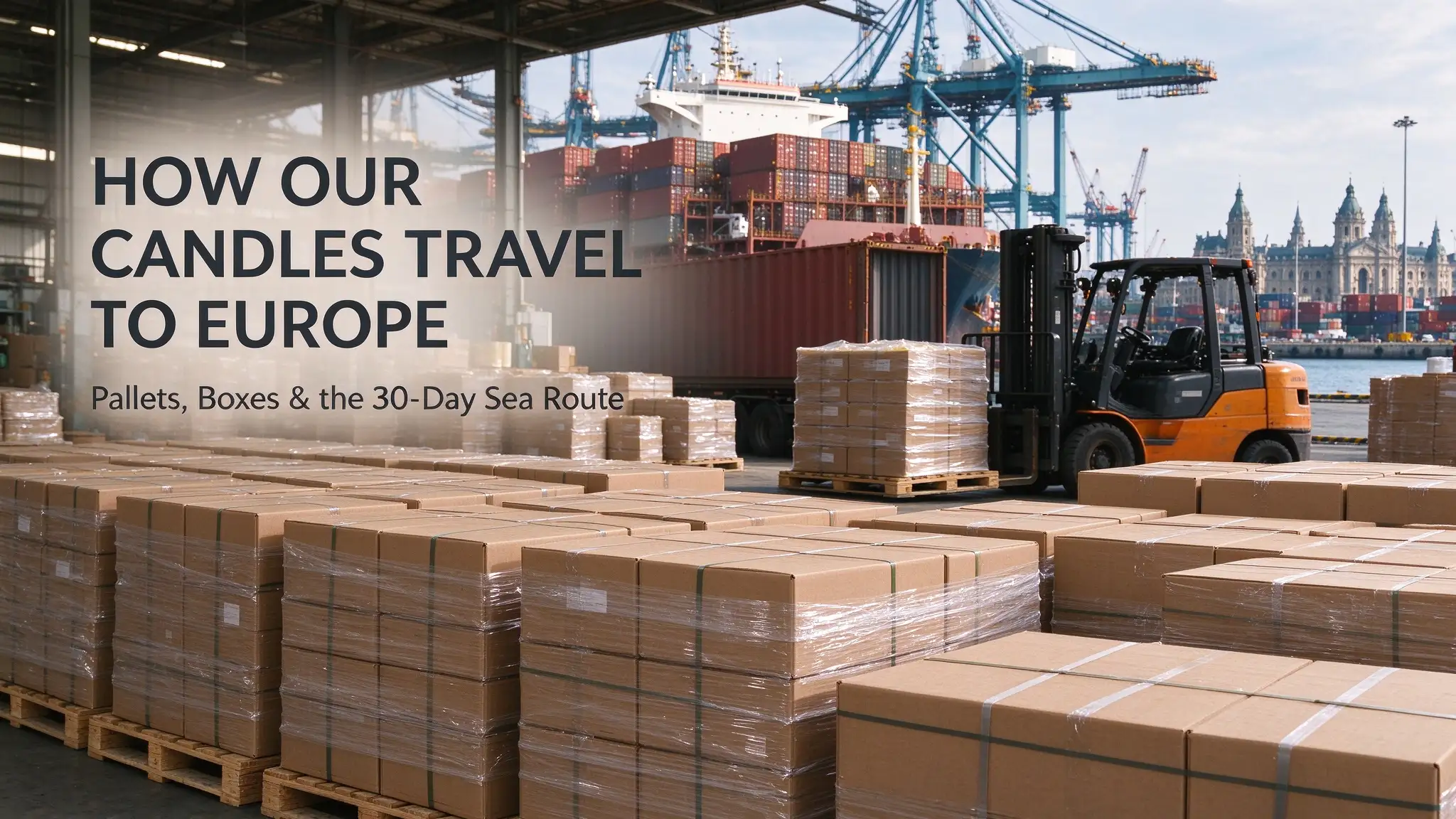
A candle is poured in a few minutes and burns for forty hours. But between our pouring table and your shelf in Rotterdam or Hamburg, it spends roughly a month at sea — and that month is part of the product.
Most candle brands talk about scent, wick and burn time. We would rather talk about what happens in between. Because a candle that arrives chipped, dented, or wearing a white film is not a candle anyone enjoys opening — no matter how well it burns. So here is a plain account of how we ship: the route we use, why everything goes on pallets, how the packaging changes with the candle inside it, and what we still cannot fully control.
By sea, from Tianjin Port
Candles go to Europe by ocean freight. Air freight is used only for samples, urgent reorders, or a trade show — the cost per kilogram makes no sense for glass or beeswax at volume.
Our departure port is Tianjin, on the Bohai coast north of Beijing. It is the largest port in northern China and one of the few with direct weekly calls to Rotterdam, Hamburg, Antwerp and Felixstowe. Direct services are our preference: every transshipment is another crane lift, another few days in a terminal, and one more chance for a carton to be handled by someone who does not know what is inside it.
Port to port, the run takes around 30 days. Add EU customs clearance and inland trucking to a warehouse in Germany or France, and a realistic door-to-door window is closer to 35–45 days. We quote these as estimates rather than promises, because schedules slip at both ends: typhoon season in the South China Sea, congestion in Northern European terminals, a customs inspection that takes three days instead of three hours.
Full container load (FCL) is the norm. For a first order or a small mixed trial, less than container load (LCL) is workable, but we tell customers what they are trading away: LCL cargo is consolidated and de-consolidated by people outside our control, which means more handling and more exposure to condensation.
Everything travels on pallets
Loose cartons are cheaper to load and worse in every other way. Every export order we ship is palletised, for four reasons that all point at the same thing — fewer hands on the cargo.
- Mechanical handling only. A pallet moves by forklift. A loose carton moves by a person, and people drop things.
- A stable stack. Cartons that can shift inside a container rub against each other for thirty days; cartons strapped to a pallet do not.
- Faster inspection. Customs and warehouse staff can count, scan and sample a pallet without unpacking it — which means less reopening of your goods.
- Cleaner receiving. Your warehouse receives a unit it can put away immediately instead of a wall of cartons to be broken down and re-stacked.
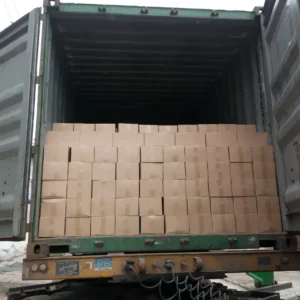
We use standard EUR pallets (1200 × 800 mm) or 1200 × 1000 mm, always ISPM 15 heat-treated and stamped — a hard requirement for wood packaging entering the EU. Cartons are stacked in an interlocking pattern rather than a straight column, the heaviest SKUs sit at the bottom, and the finished pallet gets corner boards, two horizontal plastic straps, and stretch wrap. Edge protectors go on before the wrap, because stretch film alone will not stop a strap from cutting into the top layer of cartons.
A 40-foot high-cube holds a full order comfortably. A typical pallet is labelled with SKU, quantity, batch and gross weight, so a mixed pallet can still be checked line by line against the packing list.
The packaging follows the candle, not the other way round
There is no universal candle box. A beeswax pillar and a 200 g scented glass have almost nothing in common as physical objects: different weight, different failure mode, different enemy. So the packaging is designed per type, against a specific question — what happens if this falls off a waist-high stack, or sits in a hot container for four weeks?
Beeswax candles: the interlocking box
Beeswax is dense. A 20 cm pillar is heavier than it looks, and when a heavy carton lands on a corner, the box — not the wax — is usually what fails first. A standard glued box can split along a seam and spill its contents across a warehouse floor; the candles then arrive chipped, dusty, or missing.
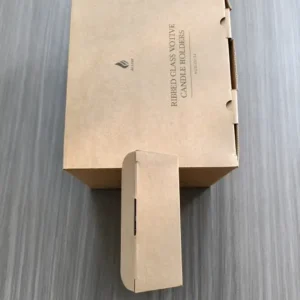
That is why most of our beeswax lines use a tuck-lock / interlocking box: a self-locking base and interlocking tabs that hold the walls together without glue. Under impact the box flexes and stays closed instead of bursting open. Inside, candles are tissue-wrapped and, for multi-packs, separated by moulded pulp or a cardboard insert so they cannot knock against each other.
Scented candles in tins: the container is the protection
A seamless tin with a tight lid is its own packaging. It protects the wax from light and dust, holds the fragrance in, and stacks without deforming. The transit risks are narrower but real: a dented rim means the lid will not seal again after the customer opens it, and prolonged humidity in a sea container can start corrosion on a thin tin.
We specify tin gauge rather than accepting whatever is cheapest, keep desiccant in the master carton, and avoid loading tins directly against container walls, where condensation collects.
Glass jars: where the real work happens
Glass is the hard case. It fails from impact, from thirty days of vibration, and from thermal shock — a container that reaches 60 °C in the afternoon sun and drops to 15 °C at night will stress a jar in ways a drop test never reproduces.
Protection is built in layers: a honeycomb or egg-crate divider, an air-column bag, or an EPE foam ring around each jar; an individual box; then a master carton with at least 5 cm of cushioning on every side so that nothing touches the wall. Fragile jars never sit in the bottom layer of a pallet, and never in the top layer either — the two positions that take the most punishment.
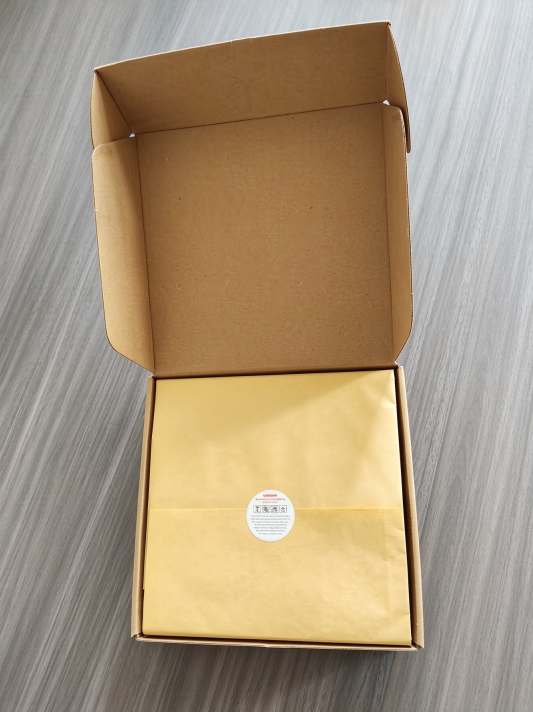
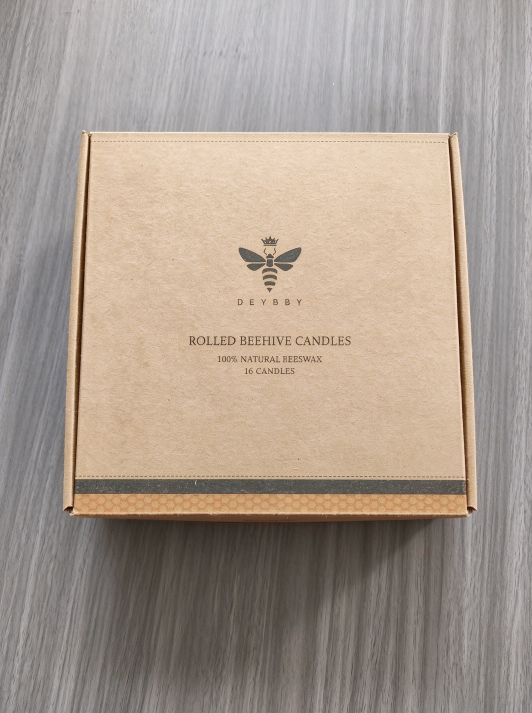
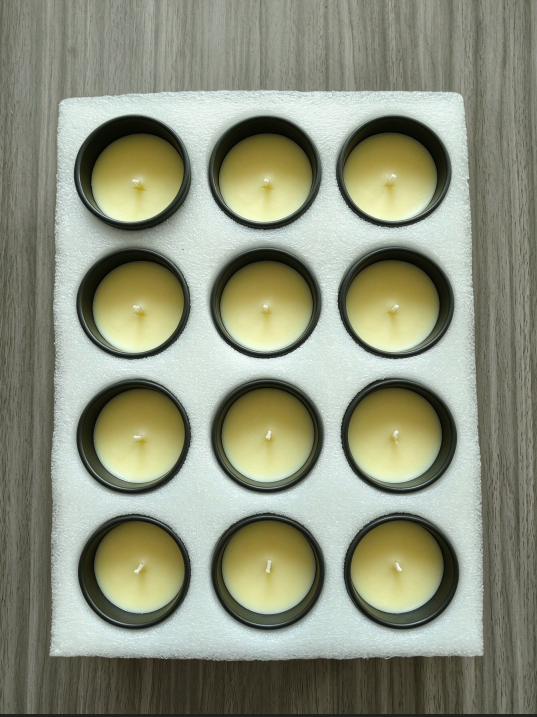
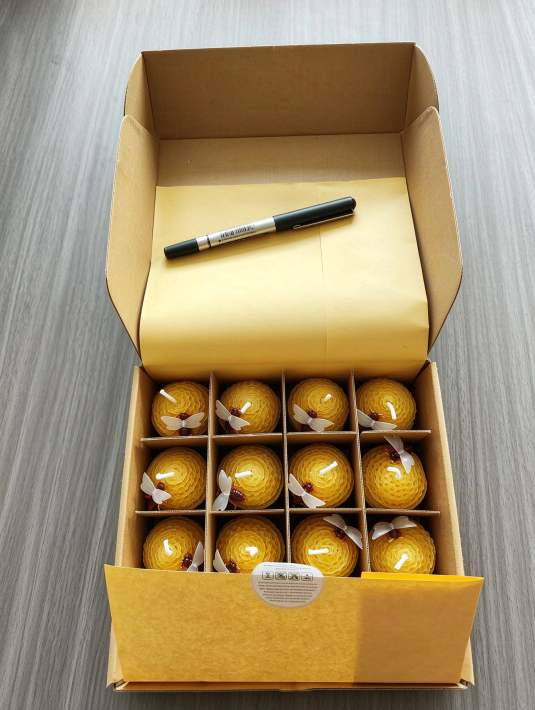
Before a new glass line ships, we run carton drop tests — corner, edge and face drops from 80 cm — plus a compression check on a full pallet. It is not a guarantee. Glass is glass, and any supplier who tells you their packaging makes breakage impossible is selling you something other than packaging.
| Candle type | Primary container | Main transit risk | Protection |
|---|---|---|---|
| Beeswax | Interlocking box | Box bursting open, chipped edges | Self-locking base, tissue wrap, pulp inserts for multi-packs |
| Scented, tin | Seamless tin | Dented rim, corrosion | Specified tin gauge, desiccant, kept off container walls |
| Scented, glass | Glass jar | Impact, vibration, thermal shock | Dividers or foam rings, individual box, cushioned master carton |
Two things we still cannot fully control
Good packaging reduces risk. It does not remove it. Two problems come up often enough that we now raise them before the order is placed, not after it lands.
Heat
A steel container sitting on deck in the sun is a greenhouse. Interior temperatures of 60–70 °C are normal in summer, and that is above the point where many waxes soften. What follows is not dramatic: jars weep oil, wicks lean, labels lift at the corner, the surface of a pillar sags into an oval, and fragrance loses its top notes.
We plan around it rather than pretending it away. Where a customer’s schedule allows, we avoid loading in the hottest weeks; we choose services with shorter terminal dwell, since time on a quay is as damaging as time at sea; for summer shipments of soy or coconut blends, which are softer than paraffin, we adjust the wax blend or recommend a harder option; and we ask customers not to store pallets in direct sunlight or next to a loading dock heater after arrival.
Our rule
If a shipment carries a real heat risk in a given month, we say so before booking — even when the customer would rather not hear it. A delayed order is a conversation. A melted order is a lost customer.
Bloom
Beeswax sometimes develops a white, powdery film on its surface. Customers occasionally mistake it for mould or spoilage. It is neither. It is bloom — natural wax esters migrating to the surface as the candle cycles through warm and cool temperatures, which is exactly what a month in a container guarantees.
It is harmless, it does not affect how the candle burns, and it can be wiped away with a soft dry cloth or a brief pass of gentle warmth. It cannot be entirely prevented on a 30-day ocean voyage, so we do the next best thing: we tell first-time beeswax buyers that it may happen, and send a photo of what it looks like, before the pallet leaves. A customer who expects bloom sees a natural wax behaving naturally. A customer who does not expect it files a quality claim.
Almost every damage claim we have ever resolved came down to the same thing: something the customer did not know in advance.
The same logic covers the smaller risks — a dented tin, condensation inside a carton, a customs delay that pushes delivery past a launch date. All shipments carry marine cargo insurance, we agree in writing who bears what, and the loading photos give us an evidence base when something does go wrong.
Packaging is a promise
We think of the thirty days at sea as part of the product, not a gap between the factory and the customer. The pallet, the interlocking box, the divider around a glass jar — none of it is visible when someone lights the wick. But it is the reason the candle is intact enough to be lit at all.
If you have packaging requirements of your own — a specific drop-test standard, a retail-ready box, your logo printed on the master carton, or a sample carton you would like us to match — send it over. We would rather build the packaging around your market than ship you a box you have to repack.
Common questions
How long does shipping from China to Europe take?
Around 30 days port to port from Tianjin, and typically 35–45 days door to door once EU customs clearance and inland transport are included. Schedule and season both move this number.
Do you ship full containers or is LCL possible?
Both. FCL is standard for volume orders. LCL works for first orders and mixed trials, with the caveat that consolidation means additional handling outside our control.
Can white bloom on beeswax be avoided?
Not entirely over a month of temperature cycling. It is a natural surface effect, not spoilage, and does not affect burning. It wipes off with a soft cloth.
Can you use our own packaging and branding?
Yes. We can work from your artwork, your box spec, or a physical sample, and we will run drop and compression tests on the result before the first pallet ships.


