



Blog
Beeswax Tealights vs Paraffin Tealights: Full Objective Comparison

Tealight candles are one of the most versatile candle formats, widely used for home decor, worship, spa, wedding, hospitality and retail resale. When bulk buyers and consumers shop for tealights, the biggest decision is choosing between beeswax tealights and classic paraffin tealights.
This objective comparison breaks down both candle types across six core dimensions: burn time, smoke, odor, environmental impact, price and target customers, helping wholesale buyers, shop owners and end users make better purchasing decisions.
Burn Time
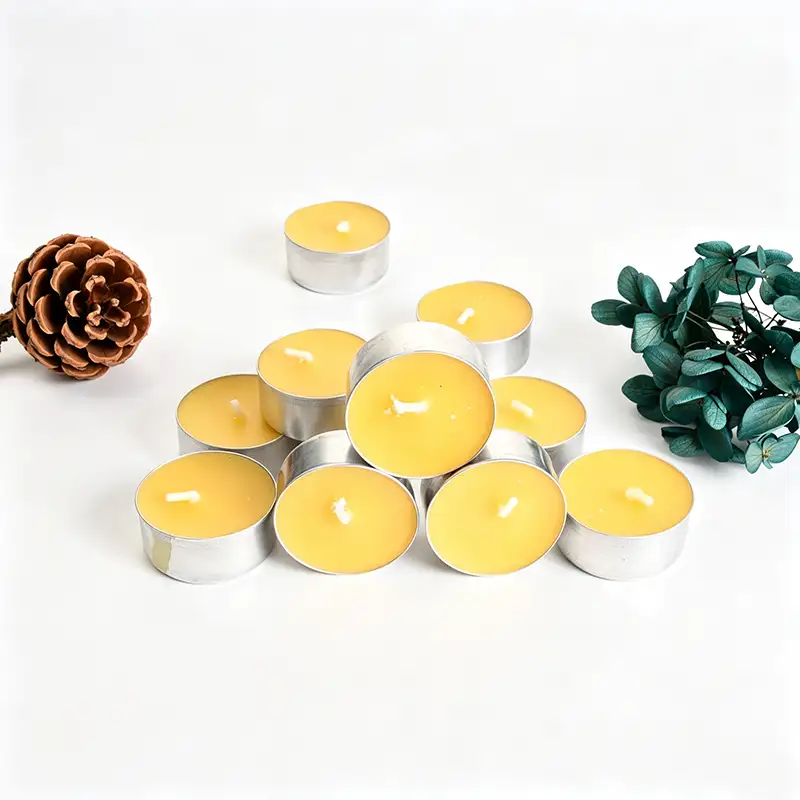
Beeswax has a higher melting point and denser molecular structure, which means it burns slower and more evenly under stable conditions. Standard aluminum cup pure beeswax tealights typically deliver 4–5 hours of consistent burn time with a properly trimmed cotton wick and no strong drafts. The flame stays steady and wax pool forms uniformly without fast wax depletion.
Paraffin tealights are the market mainstream. Standard paraffin tealights also advertise 4–5 hours burn time, yet they burn faster in real-world use. Uneven burning, tunneling and premature flame fading are common if the wick is not well calibrated. For buyers calculating cost per burning hour, beeswax tealights often offer longer effective runtime for the same physical size.
Smoke & Soot
High-quality pure beeswax tealights produce almost no visible smoke and minimal soot when burned correctly. Complete combustion reduces black carbon residue, so they rarely leave black marks on glass candle holders or walls. This is a major advantage for indoor use, spas, churches and enclosed rooms.
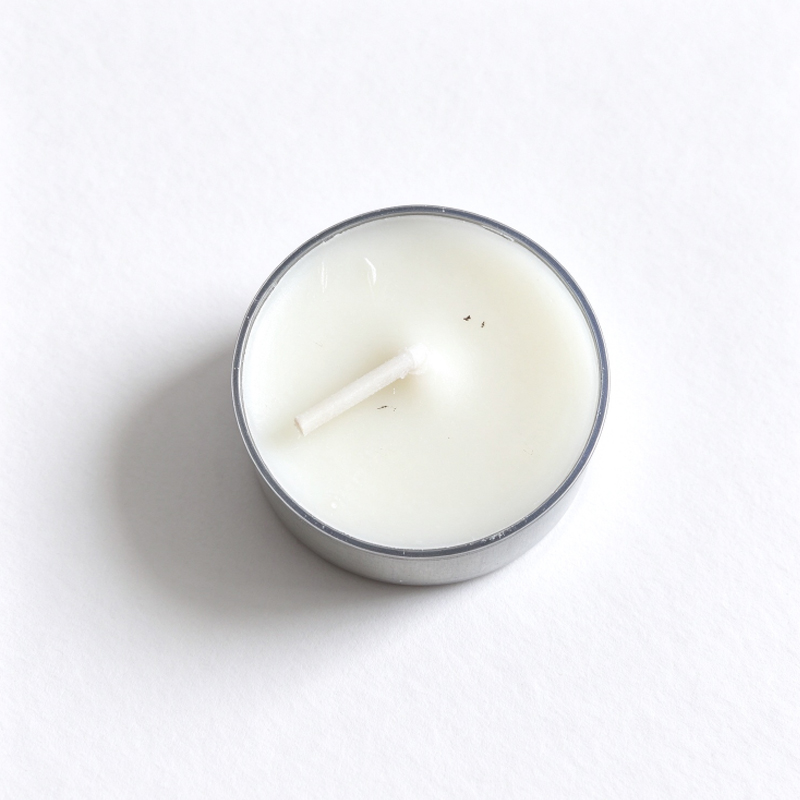
Paraffin is a petroleum derivative. Cheap bulk paraffin tealights tend to release visible smoke and black soot, especially in drafty spaces or with poorly made wicks. Premium refined paraffin can burn clean, but low-cost wholesale paraffin tealights are the most likely to create soot buildup.
Odor & Scent Performance
Unscented pure beeswax tealights carry a subtle, natural mild honey aroma, no synthetic fragrance oils added. Their scent throw is gentle; the honey note is noticeable close to the candle, and will not overpower a room. Beeswax is less ideal for making heavily scented tealights, as it holds synthetic fragrance less effectively than paraffin.
Paraffin tealights excel at fragrance diffusion. Paraffin wax works very well with synthetic fragrance oils, delivering strong, room-filling scent throw. Most mass-market scented tealights you find in supermarkets and gift shops are paraffin-based. Unscented paraffin tealights have little natural smell on their own.
Eco & Sustainability Profile
Beeswax is a renewable natural byproduct of honey farming, biodegradable and non-toxic. Pure beeswax tealights contain no petroleum compounds. For retailers building eco-friendly product lines, beeswax tealights match consumer demand for natural, non-synthetic home goods.
Paraffin wax comes from crude oil refining, a non-renewable fossil resource. It is not biodegradable. While refined food-grade paraffin is safe for candle use, paraffin products struggle to appeal to buyers prioritizing zero petroleum, natural and sustainable merchandise.
Price
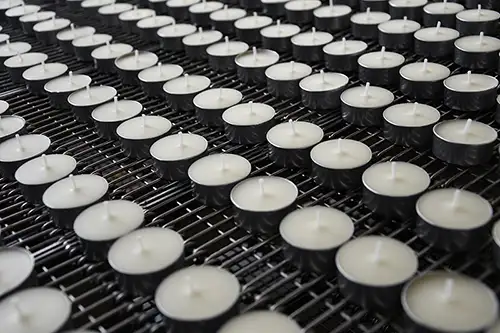
Paraffin tealights have the lowest upfront unit cost. Raw paraffin wax is cheap and mass-produced, so bulk wholesale paraffin tealights have a very competitive price point. This makes paraffin the default choice for high-volume, low-margin retail and event use.
Beeswax raw material costs are much higher. Therefore beeswax tealights carry a higher wholesale and retail unit price. Even though beeswax has longer burn time, the initial procurement investment is higher for bulk buyers. Beeswax tealights belong to the premium candle category.
arget Customers
Beeswax tealights best fit:
- Eco-conscious retailers, wellness stores, yoga & meditation studios
- Religious worship, memorial and spiritual ritual buyers
- Boutique gift shops, high-end wedding planners
- Consumers sensitive to synthetic fragrance, smoke and soot
- Wholesale buyers building premium, natural candle product lines
Our natural beeswax tealights in aluminum cups are designed for these premium market segments, with stable burn and clean flame.
Paraffin tealights best fit:
- Large supermarket chains, dollar stores and budget gift retailers
- Big events, wedding bulk decor, short-term hospitality use
- Buyers looking for low-cost, heavily scented tealight options
- High-volume seasonal promotional candle orders
Summary Table
| Feature | Beeswax Tealights | Paraffin Tealights |
|---|---|---|
| Burn Time | 4–5h, slow & even burning | 4–5h rated, faster real consumption |
| Smoke & Soot | Near soot-free with proper burning | Risk of soot for low-grade bulk options |
| Odor | Subtle natural honey scent; weak fragrance load | Strong synthetic scent throw, no natural aroma |
| Eco | Renewable, biodegradable natural wax | Petroleum-based, non-renewable |
| Price | Higher wholesale & retail price | Low cost for bulk orders |
| Ideal Buyers | Premium, eco, spiritual, wellness markets | Budget mass retail, large events, scented lines |
Final Recommendation
If your customers prioritize clean burn, natural raw materials and low soot for meditation, worship or upscale home decor, beeswax tealights are the stronger pick. For large-volume, cost-sensitive projects or strongly scented product collections, paraffin tealights remain a practical mainstream solution.
Many retailers carry both lines to cover different customer budgets and needs. Browse our full beeswax candle collection to explore more beeswax candle options for your catalog.
FAQ
Are beeswax tealights truly smokeless?
Pure beeswax tealights burn with nearly zero smoke when wick is trimmed and away from drafts. Strong wind or overlong wicks will still create minor smoke.
Can I mix beeswax tealights and paraffin tealights in one retail store?
Yes. Most candle retailers stock both. Paraffin serves budget buyers, while beeswax targets premium, eco and spiritual customers.
Do beeswax tealights cost more in bulk wholesale?
Yes. Raw beeswax is more expensive than paraffin, so MOQ bulk pricing for beeswax tealights is higher per unit.


