



Blog
How to Prevent Candle Tunneling and Save Your Flame

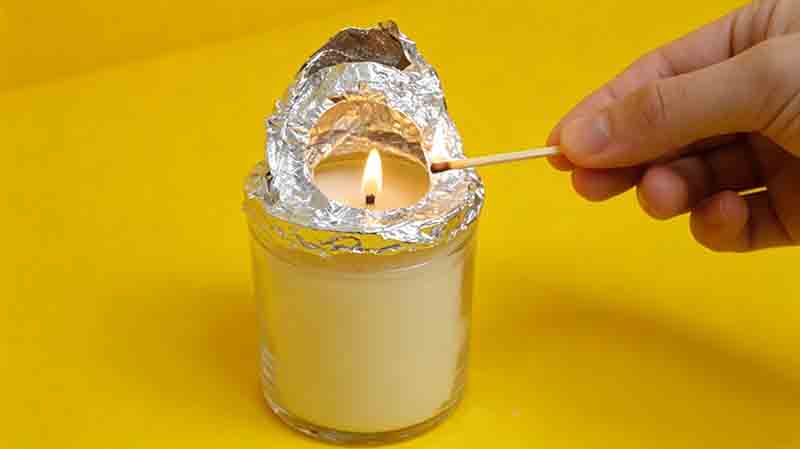
Have you ever lit a beautiful, brand-new candle, only to watch it burn a stubborn, narrow pit right down the center, leaving a thick, tragic ring of wasted wax clinging to the glass? In the candlemaking world, we call this “tunneling.” It’s heartbreaking, but more importantly, it means your candle is living only half its intended life.
As artisans at tabo Candle Factory, we often joke that candles are just like human beings—they have an incredibly stubborn memory. If you don’t treat them right during their very first “awakening,” they will remember that limitation forever.
If you are tired of wasting your favorite scents, here is a masterclass from a professional candle maker on how to prevent candle tunneling, why it happens in the first place, and how to pick the right wax that naturally resists it.
The Secret Birth of a Tunnel: Why Candles “Remember”
To understand how to prevent candle tunneling, we first need to look at what is happening inside the jar.
When a candle is lit, the flame melts the solid wax, turning it into a pool of liquid. This liquid pool is the “lungs” of the candle—it is what throws the fragrance into your room. However, wax is a material governed by thermal memory.
If you blow out a candle before the liquid pool has managed to stretch its arms all the way to the edge of the glass container, the candle throws a tantrum. It registers that tiny, narrow circle as its permanent boundary. The next time you light it, the flame will lazily follow that exact same path of least resistance, digging a deep trench downward while the outer walls remain cold, solid, and utterly wasted.
The Master’s Guide: How to Prevent Candle Tunneling For Good
Preventing this domestic tragedy is actually beautifully simple, requiring just a little patience and the right rituals. Here is how you can guide your candle to a perfect, flat burn every single time:
1. The Golden Rule of the “First Burn”
The first time you wake your candle up, give it your undivided attention. Never light a new candle if you plan to leave the house in 20 minutes. As a rule of thumb, let the candle burn for 1 hour for every 2.5 cm (1 inch) of the jar’s diameter. For a standard luxury jar, this means keeping it lit for 2 to 3 hours. Do not extinguish it until the top layer of wax is a completely uniform, edge-to-edge liquid pool.
2. Give the Wick a Little Haircut
Before every single light, remember to gently trim your cotton wick down to about 5 to 6 mm (1/4 inch). An overgrown, wild wick creates an unstable, dancing flame that flickers too rapidly, failing to distribute heat evenly across the surface, which quietly triggers tunneling.
3. Protect It From the Cold Draft
Candles hate a chilly breeze. If you place your candle near an open window, an air conditioning unit, or a drafty hallway, the cool air will chill the glass sides of the jar. This prevents the heat from reaching the outer edges, forcing the flame to burrow straight down.
Want a quick, 2-minute visual guide on how to save a candle that has already started tunneling? Check out this incredibly satisfying tutorial by lifestyle creators on YouTube:
The Anatomy of Material: Which Waxes Are Naturally Defiant to Tunneling?
As a candle manufacturer, we work with dozens of raw materials every day, and we can tell you honestly: the chemistry of the wax dictates how vulnerable it is to tunneling.
If you want a candle that is inherently forgiving and easy to maintain, you need to understand the structural personalities of different waxes:
- The Champion of Flawless Burns: Coconut Wax & Soy Blends
Coconut wax is incredibly soft and has a very low melting point. When blended correctly with natural soy wax, it behaves like pure silk under heat. The warmth of the flame spreads effortlessly through the jar, making custom soy-coconut candles the absolute best at preventing tunneling, even if you accidentally extinguish them a little too early. - The Patient Soul: 100% Pure Soy Wax
Pure soy wax is derived entirely from natural soybeans, making it a darling for eco-conscious homes. It burns beautifully slow, but because its structure is a bit softer than paraffin, it requires you to respect the “first burn” rule. Once you establish the initial liquid pool, it rewards you with a flawless, soot-free life. - The High-Maintenance Beauty: Paraffin & Heavy Beeswax
Traditional paraffin is firm and rigid, while pure beeswax is incredibly dense with a very high melting point. Because beeswax requires immense heat to melt, it is highly prone to tunneling if the wick size isn’t absolutely perfect. It requires a powerful flame and a highly disciplined owner to keep it burning flat.
Let’s Craft the Perfect Burn Together
At tabo, we don’t just manufacture candles; we study the intricate physics of heat, wax density, and wick synergy. When we design our tabo Artisan DIY Candle Making Kits, we take all the mathematical guesswork out of your hands. We calculate the exact jar diameter and pair it with a custom-measured, premium lead-free cotton wick and our signature, easy-melt natural soy wax blend.
This means that when you pour your own DIY creation at home, the wax and wick work in perfect harmony, naturally resisting tunneling and ensuring that every single drop of your hand-poured luxury burns cleanly down to the very last whisper.