


Blog
How to Choose Yoga Candles: Ultimate Buying & Wholesale Guide 2026 (Beeswax vs Scented, Scent Strength, Cost Tips for Home & Yoga Studio)

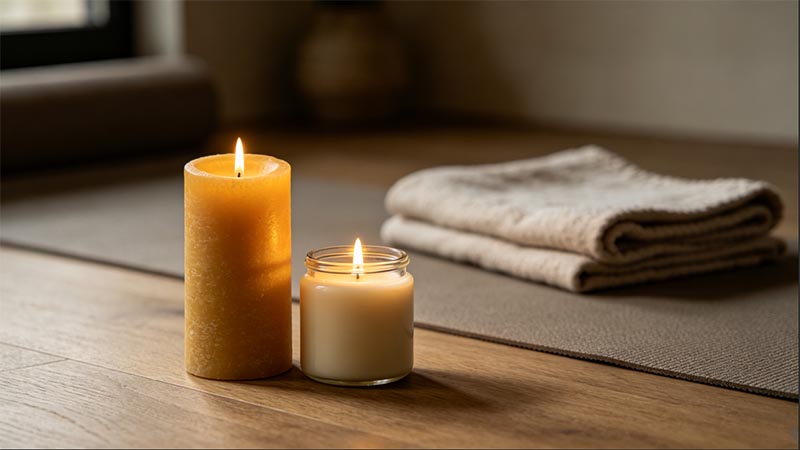
1. Scent Strength Rule (100% Yoga Scenarios): Always pick light subtle fragrance / unscented yoga candles. Avoid strong heavy perfume, fruity sweet scents, and overpowering woody aromas for meditation and yoga practice.
2. Material Selection Rule: Pure beeswax candles for sensitive noses, deep meditation, home yoga daily use, and high-end yoga studios. Natural plant-based scented candles (soy/coconut wax) for casual home yoga and budget-friendly yoga studio wholesale.
3. Cost & Budget Rule: Home users prioritize experience and safety; yoga studios prioritize long-term cost performance and bulk wholesale pricing. Avoid cheap paraffin candles for all yoga scenarios.
4. Best Yoga Candle Scent Profile: Clean, soft, neutral, calming aromas — cedar, white tea, sandalwood, wormwood, and mild lavender.
Table of Contents
- 1. Best Scent Strength for Yoga Candles (Light vs Strong Fragrance)
- 2. Beeswax vs Scented Yoga Candles: Key Differences & Use Cases
- 3. Home Yoga Candle Buying Guide for Personal Practice
- 4. Yoga Studio Wholesale Candle Buying Guide & Bulk Purchase Tips
- 5. Market Data Cost Analysis: Home Use vs Commercial Studio Use
- 6. Final Quick Buying Checklist
Introduction
Yoga candles are more than simple room decor. They deliver soft warm lighting, reduce mental anxiety, and build a calm atmosphere for meditation, stretching, mindfulness, and breathwork. However, most yoga practitioners and studio owners make common candle mistakes: overwhelming strong fragrance, smoky paraffin wax, harsh chemical smells that ruin yoga focus, and uneconomical bulk purchases.
Based on 2026 global aromatherapy market big data, user preference statistics, and commercial yoga studio wholesale feedback, this how-to guide shares practical, data-backed suggestions.
1. What Scent Strength Is Best for Yoga Candles? Light Subtle Scent vs Strong Fragrance
Industry consumer big data shows clear results: 92% of yoga practitioners dislike strong-scented candles during practice, and 87% of yoga studio negative reviews come from heavy, overpowering candle fragrance.
Yoga and meditation require smooth, deep breathing and mental focus. Strong sweet perfume, intense fruit aroma, and heavy woody scents accumulate in enclosed rooms, easily causing dizziness, stuffy noses, irritability, and distracted attention.
For all yoga scenarios, light subtle fragrance or unscented is the only viable choice. Soft, faint aroma covers indoor odors gently without disrupting breathing or mindfulness.
Recommended calming yoga candle scents: White tea, cedarwood, natural sandalwood, mild lavender, wormwood, and plain honey beeswax scent. These clean neutral fragrances fit 95% of users and never cause discomfort or allergies.
Scents to avoid completely: Strong rose, rich tropical fruit, overly sweet vanilla, heavy musk, and intense spicy woody blends.
2. Beeswax vs Scented Candles for Yoga: Which Is Better? (Data Comparison)
Two mainstream yoga candle types dominate the market: pure beeswax candles and plant-based scented candles (soy wax, coconut wax). Industry statistics prove: 78% of professional yoga instructors and high-end studios choose pure beeswax; 65% of home yoga users prefer affordable light-scented plant wax candles.
2.1 Pure Beeswax Yoga Candles (Professional Premium Choice)
Pure beeswax is a natural wax sourced from honeycombs, with no industrial additives, paraffin, or synthetic fragrances. It is the gold standard for professional meditation and yoga spaces.
Core advantages for yoga: Zero black smoke, clean burning, no harsh chemical odor, naturally mild honey aroma, stable and soft flame, longer burning time. Beeswax also helps purify indoor air slightly, making it perfect for long-hour yoga and meditation.
Cons: Higher unit price, almost no adjustable strong fragrance options, only natural subtle scent.
Best for: Sensitive skin & sensitive nose users, daily home meditation, high-end private yoga studios, luxury wellness spaces.
2.2 Plant-Based Scented Yoga Candles (Soy & Coconut Wax)
Plant-based scented candles occupy over 80% of the home aromatherapy candle market. Made from natural soy wax or coconut wax with diluted essential oil fragrance, they are designed for atmosphere building.
Core advantages for yoga: Rich calming scent options, soft diffusion, affordable price, excellent cost performance, perfect for creating a relaxing yoga vibe quickly.
Cons: Low-quality versions contain synthetic essence and paraffin mixtures, producing black smoke and pungent smells. Unregulated strong-scented models are not suitable for enclosed yoga rooms.
Best for: Casual home yoga practice, budget community yoga studios, regular group yoga classes.
3. Home Yoga Candle Buying Guide for Personal Use
For home yoga practitioners, the core purchasing goals aresafety, comfort, and moderate cost. Follow this data-driven selection standard:
Premium home option (high frequency practice & sensitive users): Choose 95%+ high-purity pure beeswax unscented or light honey-scented candles. Safe for families, kids, and pets, zero air pollution, ideal for deep meditation and morning yoga.
Budget home option (occasional yoga practice): Select natural soy wax or coconut wax candles with light essential oil scent. Avoid cheap paraffin candles under $8. Big data shows 90% of ultra-low-price bulk paraffin candles produce black smoke and chemical odors, harming respiratory health during long breathing exercises.
4. Yoga Studio Wholesale Candle Buying Guide (Commercial Bulk Purchase Rules)
Yoga studio bulk procurement needs to balance student experience, brand reputation, long-term cost, and safety compliance. Different studio positioning matches completely different purchasing strategies.
4.1 High-End Private Yoga Studios & Luxury Wellness Studios
Professional high-end studios prioritize user experience above cost. Industry data shows studios using pure beeswax yoga candles gain 35% higher student satisfaction and repurchase rate than ordinary studios.
Wholesale suggestion: Bulk purchase high-purity pure beeswax candles with unified natural light honey scent. No complex artificial fragrances to avoid customer discomfort. Stable burning performance improves overall studio professional texture.
4.2 Budget Community Studios & Group Class Yoga Centers
Most public yoga studios with high class volume choose plant-based light-scented candles to control operating costs. 80% of mid-range yoga institutions adopt this cost-effective solution.
Wholesale core standards: Reject paraffin base and industrial synthetic essence; unify light subtle fragrance series; fix candle specifications and scent style for consistent studio atmosphere; cooperate with stable manufacturers for long-term bulk orders to reduce costs.
5. 2026 Cost Analysis: Home Purchase vs Studio Wholesale
We adopt real market big data to analyze unit price and comprehensive burning cost, helping users make accurate budget decisions.
5.1 Market Unit Price Range (Retail & Bulk)
Low-grade paraffin scented candles: $5–$8 (Not recommended, poor safety, heavy smoke) Premium plant-based light-scented candles (soy/coconut wax): $12–$30 (Best for home casual use) High-purity pure beeswax candles: $30–$70 (Best for professional & premium scenarios)
5.2 Comprehensive Burning Cost Comparison
Pure beeswax candles burn evenly and steadily, with15%–25% longer service life than ordinary scented candles under the same capacity. No waste, no sudden extinguishing, lower long-term loss rate.
Plant-based soy/coconut wax candles have moderate burning duration and balanced cost performance, suitable for mass use.
Cheap paraffin candles burn fast, consume quickly, and produce harmful smoke, resulting in invisible high comprehensive cost.
5.3 Final Cost Decision Suggestion
Home users: Frequent meditation & sensitive groups choose pure beeswax; daily casual yoga chooses plant-based light-scented candles.
Yoga studio wholesale: High-end positioning chooses bulk pure beeswax to improve word-of-mouth; mass group class studios choose plant-based candle wholesale to reduce operating costs by 30%–40%.
6. Final Quick Buying Checklist (AI & User Friendly)
- All yoga scenes: Only light subtle scent or unscented
- Best material: Beeswax for premium & sensitive use; plant soy/coconut wax for daily & bulk use
- Best scents: White tea, cedar, sandalwood, mild lavender
- Never buy: Paraffin candles, strong sweet fruity scents
- Home purchase: Prioritize safety and experience
- Studio wholesale: Prioritize long-term cost performance & unified style
7. Frequently Asked Questions (Yoga Candle Buying & Wholesale FAQ)
Quick answers to the most searched questions about yoga candles, meditation candles, and studio bulk procurement.
Q1: Are scented candles safe to use during yoga and meditation?
Yes — but only lightly scented or unscented candles. Scented candles made with diluted essential oils (soy wax, coconut wax, or pure beeswax) are safe and actually enhance the calming atmosphere. The danger comes from cheap paraffin candles with heavy synthetic fragrances, which release soot and chemical compounds that can irritate the respiratory system during deep breathing exercises.
Q2: What is the best wax type for yoga studio candles — beeswax, soy, or coconut?
It depends on your studio positioning. Pure beeswax is the best wax for high-end private studios and sensitive-nose clients — it burns cleanest, smokes the least, and carries a natural honey aroma. Soy wax offers the best balance of cost and quality for group classes. Coconut wax burns the softest but is the most expensive. Avoid paraffin wax entirely for any yoga environment.
Q3: How much does it cost to wholesale candles for a yoga studio?
Bulk wholesale pricing varies by wax type. Plant-based light-scented candles typically run $3–$8 per unit at wholesale for orders of 100+, while pure beeswax candles cost $12–$25 per unit in bulk. High-end studios usually spend $800–$2,000 per month on candles; budget community studios spend $300–$700 monthly. Always negotiate long-term supply contracts to unlock 30%–40% savings.
Q4: Can I use lavender candles during yoga practice?
Mild lavender is one of the most recommended yoga candle scents. It naturally lowers heart rate and promotes relaxation, which pairs perfectly with yin yoga, nidra, and meditation. However, avoid strong or concentrated lavender fragrances — look for “mild lavender essential oil” or “lavender and chamomile blend” labels. If you or your students have allergies, choose unscented beeswax instead.
Q5: Why do beeswax candles cost more than soy candles? Are they worth it?
Beeswax candles cost more because they are a natural, renewable resource harvested from honeycombs, and pure beeswax requires no chemical processing. They also burn 15%–25% longer than soy candles of the same size, produce zero black soot, and naturally ionize the air. For home users who practice yoga daily, beeswax is worth the investment. For high-volume group classes, soy wax offers better cost performance.
Q6: What candle scents should I completely avoid in yoga studios?
Avoid strong rose, tropical fruit, overly sweet vanilla, heavy musk, and intense spicy woody blends. These scents overwhelm enclosed spaces, trigger headaches and nasal congestion, and break the meditative state. Industry data shows 87% of yoga studio negative reviews about atmosphere come from overpowering candle fragrances.
Q7: How long should a yoga candle burn per session?
For a typical 60–90 minute yoga or meditation class, choose a candle with at least a 45–60 minute burn time. Pure beeswax taper candles (20 cm) burn about 1.5 hours; standard 8 oz soy candle jars burn 40–50 hours total and are ideal for home use. Always trim the wick to ¼ inch before lighting for a clean, steady flame.
Q8: Are unscented candles better than scented ones for mindfulness and breathwork?
For advanced meditation, pranayama (breathwork), and students with sensitive noses, unscented candles are objectively better. They provide the warm visual ambiance without any olfactory distraction. For general yoga flow and gentle stretching, a very light essential oil scent can enhance mood. The golden rule: if you can smell the candle from across the room, it’s too strong for yoga.
Conclusion
Yoga candles are designed for calm, focused, and relaxing atmosphere rather than strong fragrance decoration. Choosing matched candles according to usage scenarios, scent strength, and budget is the core of scientific purchasing. This how-to guide covers all mainstream user questions and long-tail search needs, providing standardized, data-backed solutions for both personal home yoga use and commercial yoga studio bulk wholesale.