




Blog
How To Tell If Your Old Scented Candle Is Safe To Burn

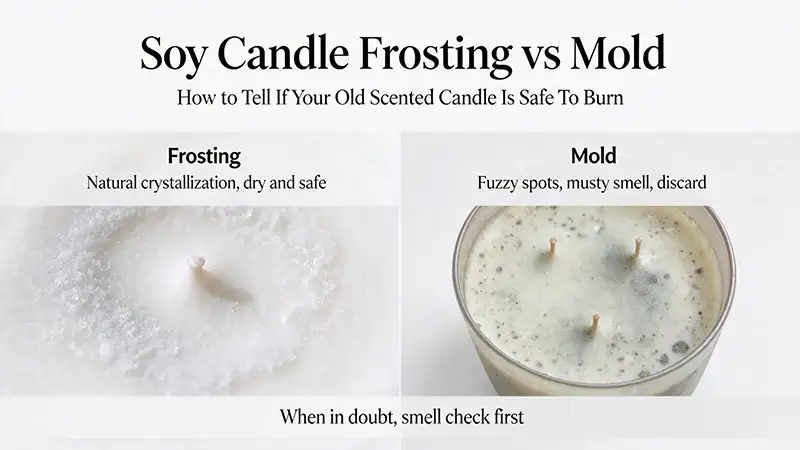
If you stock, collect or sell plant-based soy candles, you may have encountered a confusing issue: a white, cloudy layer forming on the candle surface after years of storage. Many people mistake this natural wax frosting for mold and worry whether the candle is spoiled, smelly or unsafe to light.
This guide covers the key differences between frosting, mold and rancid wax, plus how long scented soy candles hold their fragrance.
What Is Frosting On Soy Candles?
Frosting (also called bloom) is a natural crystallization feature of soy wax and other plant waxes. It appears as a matte, milky white or pale grey haze spread evenly across the wax top.
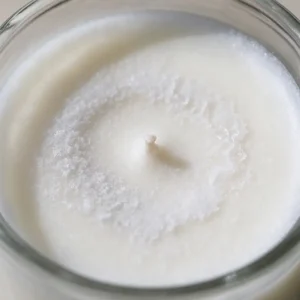
- Texture: Dry, powdery crystalline look, no fuzzy hair-like growth
- Smell: No sour, musty or rancid odor
- Safety: Frosting is harmless. It does not make the candle unsafe to burn, and it is not a sign the candle has gone bad.
- Fragrance impact: Frosting itself does not change the candle scent.
Frosting is very common for long-stored soy candles, especially candles kept for 5+ years. Temperature shifts during storage and shipping will speed up crystallization.
How To Spot Real Mold On Candles
Mold grows only when moisture gets trapped inside the candle jar. It looks completely different from frosting:
- Shape: Isolated spots, fuzzy, patchy growth, not an even haze
- Smell: Clear musty, moldy odor
- Safety: Do NOT burn moldy candles. Burning mold spores can release irritants into the air. Discard the candle right away.
Will Old Plant-Based Scented Candles Change Scent / Go Rancid?
This is the biggest concern for candle retailers and collectors.
Yes, plant wax candles including soy candles can change scent over time, and they may turn rancid after long storage.
Fragrance fade (most common)
Fragrance oils slowly evaporate and oxidate. Fresh, bright notes like citrus fade fastest. After 2–5 years, the scent will become weaker, and the aroma profile may feel flat. The candle can still burn safely if there is no bad smell.
Rancid wax (true spoilage)
Plant oils in soy wax will oxidate after many years, especially in warm, light storage. Signs of rancidity: Strong sour, stale, oily “rancid” smell, even if the candle looks normal.
Rancid candles should not be lit. Burning oxidized, rancid plant wax creates unpleasant odors and harmful volatile compounds.
Shelf life reference for scented soy candles
- Best period: 1–2 years sealed, cool & dark storage. Full fragrance performance.
- 2–5 years: Scent gradually weakens. Usually safe to burn.
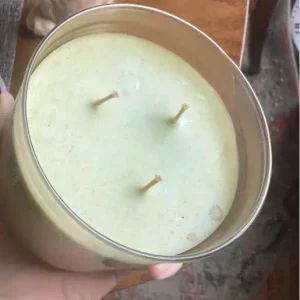
- 8–10 years or longer (like the 2014–2015 vintage candle example): Even if it looks only frosted, always do a smell check before lighting. If no sour/rancid smell, it can burn, but the original scent will be much lighter.
Quick Check List Before Lighting An Old Soy Candle
- ✅ Surface is evenly cloudy, dry, no fuzzy spots → Frosting, safe to burn
- ✅ No sour, musty, rancid smell
- ❌ Fuzzy patches, dark spots, musty odor → Mold, discard
- ❌ Smells sour or stale oily → Rancid, discard
- ❌ Stored in hot, damp place for many years, high risk of spoilage
Tips For Wholesale Candle Sellers
For your inventory:
- Keep soy candles away from direct sunlight and high temperature warehouses
- Avoid large temperature swings to reduce frosting
- Inform your customers that frosting is a natural feature of soy wax, not a defect
- tabo commended shelf life for scented candles on product packaging
FAQ
Does frosting make soy candles smell different?
No. Frosting is wax crystallization only. Scent change comes from fragrance oil oxidation, not frosting.
Can I sell frosted soy candles?
Yes. It is a natural characteristic of plant wax. You can add a note on your product page to explain frosting to reduce customer complaints.
Beeswax candles also get bloom?
Yes. Beeswax also develops bloom, a similar white matte layer, which is also safe. beeswax votive candles wholesale


